




TL;DR:
- Local partners significantly influence shore experiences, ensuring authenticity, quality, and pace control for luxury cruises.
- Choosing certified, cruise-aware operators with ship-return guarantees and experience enhances safety, reliability, and cultural depth.
Most luxury cruisers assume the cruise line controls everything that matters. They book excursions through the ship’s desk, trust the itinerary handed to them, and never consider who is actually waiting on the dock. The role of local partners in luxury cruises is far more significant than that assumption suggests. These on-the-ground operators, guides, drivers, and artisans shape the moments you remember long after the ship sails home. Understanding who they are and how they work can transform a good cruise into something genuinely unforgettable.
Table of Contents
- Key takeaways
- The role of local partners in luxury cruises, explained
- Logistics and timing: the operational backbone
- Cultural depth and personalization ashore
- Economic and sustainability impact of local partnerships
- How to choose the right local partners
- My take on what travelers consistently underestimate
- Plan your luxury cruise with Elitetravelgroup
- FAQ
Key takeaways
| Point | Details |
|---|---|
| Local partners shape shore experiences | Guides, operators, and vendors control the quality, pacing, and authenticity of every port day. |
| Operational expertise prevents missed ships | Experienced local partners schedule pickups and guarantee ship returns, removing your biggest risk ashore. |
| Independent operators offer better value | Local operators typically charge 30 to 50 percent less than cruise line excursions and run far smaller groups. |
| Local spending supports communities | Booking with local partners keeps money in destination economies and supports sustainable tourism. |
| Certifications signal reliable partners | Look for IATA accreditation, local tourism board licenses, and explicit ship-return guarantees before booking. |
The role of local partners in luxury cruises, explained
The term “local partner” covers a much wider range of people than most travelers realize. At the most visible end, you have shore excursion operators and licensed local guides. Behind them are private transportation providers, specialty food and wine vendors, artisan workshop owners, family-run restaurants, and cultural institutions that grant exclusive access to vetted groups.
In mainstream cruising, local partners are often large, high-volume operators running coach buses for crowds of 40 or more. Luxury cruise partnerships look completely different. They tend to involve boutique operators with deep destination knowledge, multilingual guides who specialize in specific periods of history or cuisine, and small-vehicle transfers that allow genuine flexibility in the field.
What separates a good local partner from a great one in the luxury space comes down to experience with cruise operations specifically. A brilliant historian who doesn’t understand all-aboard deadlines is a liability. The best local partners understand both the destination and the ship’s schedule with equal fluency.
- Shore excursion operators: Specialists who design and lead themed tours aligned to cruise port days
- Licensed local guides: Credentialed experts in history, culture, food, or wildlife at a specific destination
- Private transportation providers: Drivers and logistics coordinators who understand docking schedules and tender timing
- Artisans and merchants: Local craftspeople and specialty vendors who provide authentic, direct access to regional culture
- Hospitality partners: Restaurants, wineries, and private estates that host curated experiences for small luxury groups
Pro Tip: Ask your travel advisor which local partners have specific luxury cruise experience, not just general tourism experience. The distinction matters enormously when you are working within a four to eight hour port window.
Logistics and timing: the operational backbone
Here is the part most travelers never think about until something goes wrong. Every port day operates inside a narrow time window defined by docking time, disembarkation, tender schedules, the planned itinerary, and the all-aboard deadline. A single miscalculation anywhere in that chain can leave you watching your ship sail without you.
Experienced local partners build their entire operation around these constraints. A well-run private excursion from Civitavecchia, the port serving Rome, schedules pickups roughly 90 minutes after docking to allow for disembarkation delays and tender bottlenecks. That buffer is not laziness. It is the difference between a relaxed, full day ashore and a stressful sprint back to the pier.
The best operators also advertise explicit guarantees. Reputable shore excursion operators with strong track records offer ship-return guarantees in writing, meaning they take responsibility for getting you back before all-aboard, even if that requires adjusting the tour in real time. That level of operational commitment is what separates cruise-capable local partners from general tourism operators.
“Failures in shore excursions almost always come from disconnects between the planned itinerary and strict all-aboard times. The best local partners build buffers and schedule carefully so guests never face that risk.”
Here is what that operational discipline looks like in practice:
- Pre-booking responsiveness: A reliable partner responds to inquiries within 24 hours, signaling the same day-of communication discipline you will need on excursion day.
- Port-specific scheduling: They schedule pickups based on your specific ship’s docking time, not a generic start time.
- Built-in buffers: They calculate return time from the farthest point of the tour, then add a buffer for traffic, unexpected stops, or tender delays.
- Real-time contingency plans: They know alternate routes, backup timings, and who to call if something changes at the port.
Pro Tip: Before booking any independent shore excursion, ask the operator directly: “What happens if we run late and my ship is about to depart?” Their answer will tell you everything about how seriously they take cruise logistics.
Cultural depth and personalization ashore
This is where local expertise in cruises becomes truly visible. Cruise line excursions are designed for volume. They need to move 40 or more people efficiently through a destination, which means broad strokes and minimal depth. An independent local operator working with a group of eight to twelve luxury travelers can do something fundamentally different.
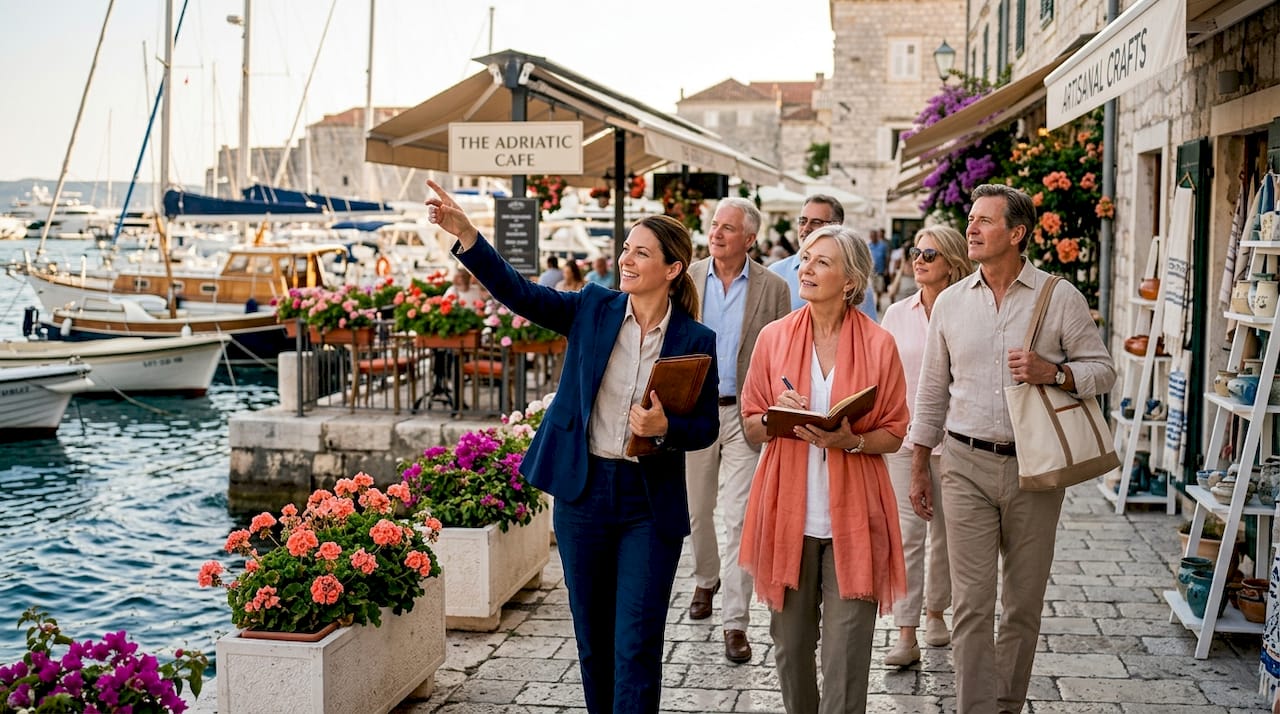
Think about what a private guide in Athens can offer a group of ten compared to what a megaship excursion can offer 45. The private guide can linger at the Parthenon for as long as the conversation warrants, detour to a neighborhood market only locals know, and arrange a private meal at a family taverna that never appears on any list. That kind of access comes from local storytelling and authentic cultural knowledge that no centralized cruise excursion desk can replicate.
The numbers back up the experiential difference, too. Independent operators typically charge 30 to 50 percent less than cruise line offerings, run groups of 8 to 19 people versus the 40-plus standard on large ships, and offer itineraries you can actually customize to your interests before you arrive.
| Factor | Cruise line excursion | Independent local operator |
|---|---|---|
| Group size | 40 or more | 8 to 19 |
| Price relative to value | Higher cost, standardized | 30 to 50 percent lower cost |
| Customization | Fixed itinerary | Flexible, interest-based adjustments |
| Cultural depth | Surface-level overview | In-depth storytelling and local access |
| Ship-return guarantee | Guaranteed by ship policy | Available from reputable operators |
Beyond the comparison, there is something harder to quantify. When a local guide in Dubrovnik tells you about their grandmother’s recipe for peka or a winemaker in Santorini explains why volcanic soil changes everything about the wine, those moments land differently than a scripted commentary delivered over a bus microphone. That authenticity is the product local partners for cruise travelers actually deliver.
Economic and sustainability impact of local partnerships
The collaboration with local businesses in cruise tourism is not just good for travelers. It is structurally important for the communities those travelers visit. Cruise tourism contributed US$98.5 billion to global GDP in 2024, generating US$199 billion in total economic output and supporting 1.8 million jobs worldwide, with 1.4 million of those jobs located onshore.
The critical variable is where the spending actually lands. When operators hire local guides and transfers, the money stays in the destination community rather than being extracted by centralized booking systems. That difference between retained and exported visitor spending is what separates tourism that builds communities from tourism that merely passes through them.
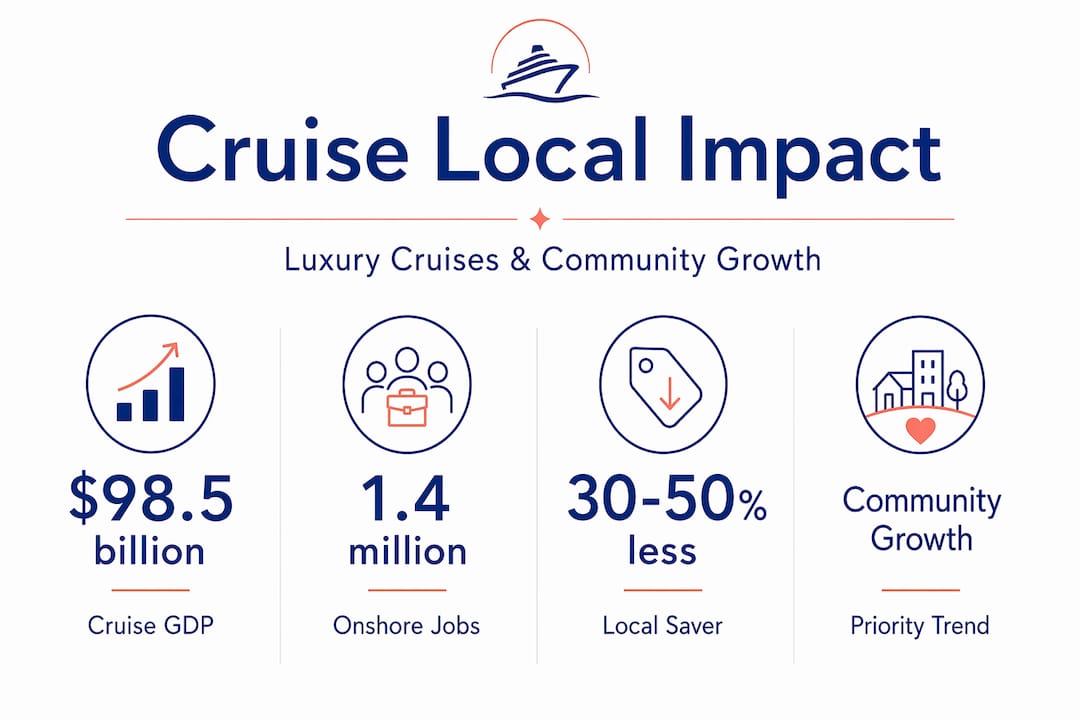
Luxury cruise lines increasingly recognize this. Many now prioritize inclusive community growth through destination partnerships, measuring their impact not just by passenger satisfaction but by the economic health of the ports they return to season after season. A destination that thrives is a destination worth returning to.
For travelers, this framing matters. Choosing a certified local operator is not just an ethical preference. It often produces a better experience because operators with roots in a community have relationships, access, and pride that transactional vendors simply do not.
| Economic indicator | 2024 global figure |
|---|---|
| Cruise tourism GDP contribution | US$98.5 billion |
| Total economic output | US$199 billion |
| Global jobs supported | 1.8 million |
| Onshore jobs specifically | 1.4 million |
How to choose the right local partners
Knowing that local partnerships matter is one thing. Finding the right partners before you board is where the real work happens. The good news is that quality leaves a clear paper trail if you know what to look for.
- Years of cruise-specific experience: Prioritize operators with five or more years working cruise schedules, not just general tourism. Cruise-capable operators advertise this experience because it is a genuine differentiator.
- Certifications and accreditations: Look for IATA accreditation, local tourism board licensing, and safety or cleanliness certifications. Trusted local partners hold these credentials because luxury clients expect them.
- Explicit ship-return guarantees: Any reputable operator will confirm in writing that they will get you back before all-aboard. If they hesitate or make excuses, move on.
- Response time before booking: If a company takes three days to answer your pre-booking question, that response pace tells you exactly what day-of communication will feel like.
- Group size limits: Confirm the maximum group size in writing. A “small group” that turns out to be 22 people is not the experience you paid for.
Pro Tip: When researching operators, search for their name alongside the specific port and the word “cruise.” Operators who rank well in that specific search context have almost always earned their position through repeat cruise business, not general tourism volume.
The other strategic move worth making: work with a luxury travel advisor who already knows these partners. How local partners transform your luxury travel experience is not something most travelers discover on their own. A good advisor has vetted dozens of operators across ports you are visiting and can match you to the right fit without the research overhead.
My take on what travelers consistently underestimate
I have seen a lot of luxury cruise itineraries built without a single thought given to what happens when the ship docks. Travelers spend weeks researching staterooms, dining options, and embarkation ports, then accept whatever shore experience the ship hands them without question. That is the single biggest missed opportunity in luxury cruise planning.
In my experience, the difference between a good port day and an extraordinary one almost always traces back to the local guide or operator on the ground. I have watched perfectly planned itineraries unravel because an operator did not understand cruise timing. I have also seen modest-looking port stops become the highlight of an entire trip because the right guide knew exactly where to take a small group and had the relationships to make it happen.
The misconception I hear most often is that independent operators are riskier than booking through the ship. That flips the reality. A vetted independent operator with a ship-return guarantee and five-star reviews from cruise travelers is far more accountable than an anonymous volume contractor working through a cruise line’s excursion desk. The benefits of local guides go well beyond cultural color. They include peace of mind, accountability, and a level of personalization that simply cannot be mass-produced.
My advice: treat your local partners as carefully as you treat your ship selection. They are not an afterthought. They are the experience.
Plan your luxury cruise with Elitetravelgroup
At Elitetravelgroup, the work of finding, vetting, and coordinating the right local partners is built into every luxury cruise vacation package we create. Our 35 years of experience means we know which operators in Civitavecchia actually honor ship-return guarantees, which guides in Dubrovnik have true access, and which shore experiences in Asia or Europe will still feel personal even at the end of a long season.

You should not have to research local operators from scratch. We have already done it. Whether you are planning a luxury European cruise or exploring destinations further afield, we connect you with on-the-ground partners who elevate every port day, with zero service fees and a price match guarantee. Reach out to our team any time, because we are available 24/7 and ready to build your ideal itinerary.
FAQ
What is the role of local partners in luxury cruises?
Local partners include guides, shore excursion operators, transportation providers, and local vendors who manage your experience once the ship docks. They control the cultural depth, pacing, and quality of every port day you spend ashore.
Why should I book with independent local operators instead of the cruise line?
Independent local operators typically charge 30 to 50 percent less than cruise line excursions, run smaller groups of 8 to 19 people, and offer personalized, flexible itineraries that large-scale ship excursions cannot match.
How do I know if a local partner is reliable for cruise excursions?
Look for operators with five or more years of cruise-specific experience, IATA accreditation, local tourism board licensing, and an explicit ship-return guarantee. Responsiveness to pre-booking inquiries within 24 hours is also a strong reliability signal.
Do local partners really support sustainable tourism?
Yes. Cruise tourism supports 1.4 million onshore jobs globally, and spending with local operators keeps that money inside destination communities rather than redirecting it through centralized booking systems. This directly sustains local livelihoods and cultural preservation.
How can a luxury travel advisor help me find the right local partners?
A specialist luxury travel advisor like Elitetravelgroup has already vetted local operators across major cruise ports and can match you to partners who meet luxury standards, understand cruise timing, and deliver personalized experiences worth the investment.
