




Organizing luxury group travel means juggling conflicting preferences, complex logistics, and vendor relationships while ensuring every guest enjoys a seamless, memorable experience. Without expert attention to detail, even well-intentioned planners face last-minute surprises, disappointed guests, and budget overruns. This guide walks you through proven methods to prepare, execute, and verify every element of a flawless luxury group trip, from early vendor booking to concierge-level personalization that maximizes satisfaction and minimizes stress.
Table of Contents
- Prerequisites: Preparing To Organize Luxury Group Travel
- Step 1: Early Planning And Vendor Booking
- Step 2: Communication And Coordination Structures
- Step 3: Personalized Concierge-Level Service And Experience Design
- Common Mistakes And Troubleshooting
- Expected Outcomes And Success Metrics
- Plan Your Luxury Group Trip With Elite Travel Experts
- Frequently Asked Questions About Organizing Luxury Group Travel
Key takeaways
| Point | Details |
|---|---|
| Early planning secures best options | Planning 6-12 months ahead guarantees luxury vendor availability and competitive pricing. |
| Clear communication prevents chaos | Defined roles, tools, and protocols eliminate coordination bottlenecks and payment confusion. |
| Personalization boosts satisfaction | Concierge-level customization increases guest satisfaction by over 60%. |
| Avoid common pitfalls | Late bookings and neglected preferences lead to costly mistakes and disappointed guests. |
| Expert planning improves success | Professional involvement raises flawless trip execution rates by up to 75%. |
Prerequisites: preparing to organize luxury group travel
Before you book a single flight or hotel room, establish a solid foundation that anticipates challenges and sets clear expectations. Start by defining a 6-12 month planning timeline to secure the best luxury accommodations and experiences. Early planning protects you from sold-out venues, inflated prices, and limited vendor availability that plague last-minute organizers.
Next, choose shared digital tools for transparency. Use collaborative spreadsheets, specialized group travel apps, or project management platforms to track bookings, payments, preferences, and timelines. Everyone involved needs access to the same information to prevent confusion and duplicate work.
Understand your group composition deeply. Collect details on size, age ranges, dietary restrictions, mobility needs, and celebration preferences. A multigenerational family reunion requires different planning than a corporate incentive trip for executives. Map out subgroup dynamics early so you can design experiences that appeal to diverse interests without fragmenting the itinerary.
Set a preliminary budget that accounts for accommodations, transportation, meals, activities, contingencies, and gratuities. Decide upfront whether you’ll collect deposits, use installment plans, or require full payment by specific deadlines. Clear financial structures prevent awkward conversations and last-minute cancellations.
Pro Tip: Create a detailed guest questionnaire that captures not just dietary needs but also activity preferences, bucket list experiences, and mobility limitations. This data becomes your personalization roadmap.
Finally, research trusted luxury vendors and local partners before you need them. Identify specialists in luxury group travel milestones who understand concierge-level service. Vetting vendors early ensures you’re ready to book the moment your plans solidify.
| Preparation Element | Timeline | Purpose |
|---|---|---|
| Guest questionnaires | 8-12 months prior | Capture preferences and needs |
| Vendor shortlist | 6-10 months prior | Identify trusted partners |
| Budget finalization | 6-9 months prior | Set financial guardrails |
| Communication tools | 6-8 months prior | Establish coordination systems |
Step 1: early planning and vendor booking
Once your foundation is set, move quickly to secure accommodations, flights, and vendors. Early bookings reduce cancellation risks and unlock group discounts that can save thousands of dollars. Airlines and luxury hotels offer block bookings that guarantee room availability and preferential pricing for groups of 10 or more.
Start with flights. Book 6 to 12 months ahead to access the widest selection of routes, seat configurations, and fare classes. Coordinate departure cities if your group travels from multiple locations. Consider chartering private flights for groups of 15 or more to simplify logistics and enhance the luxury experience.
Next, secure accommodations that can handle your group size comfortably. Luxury hotels, private villas, and boutique resorts often require substantial lead time for large parties. Negotiate contracts that include flexible cancellation terms, complimentary upgrades, early check-in, and late checkout. Clarify what happens if group size changes.
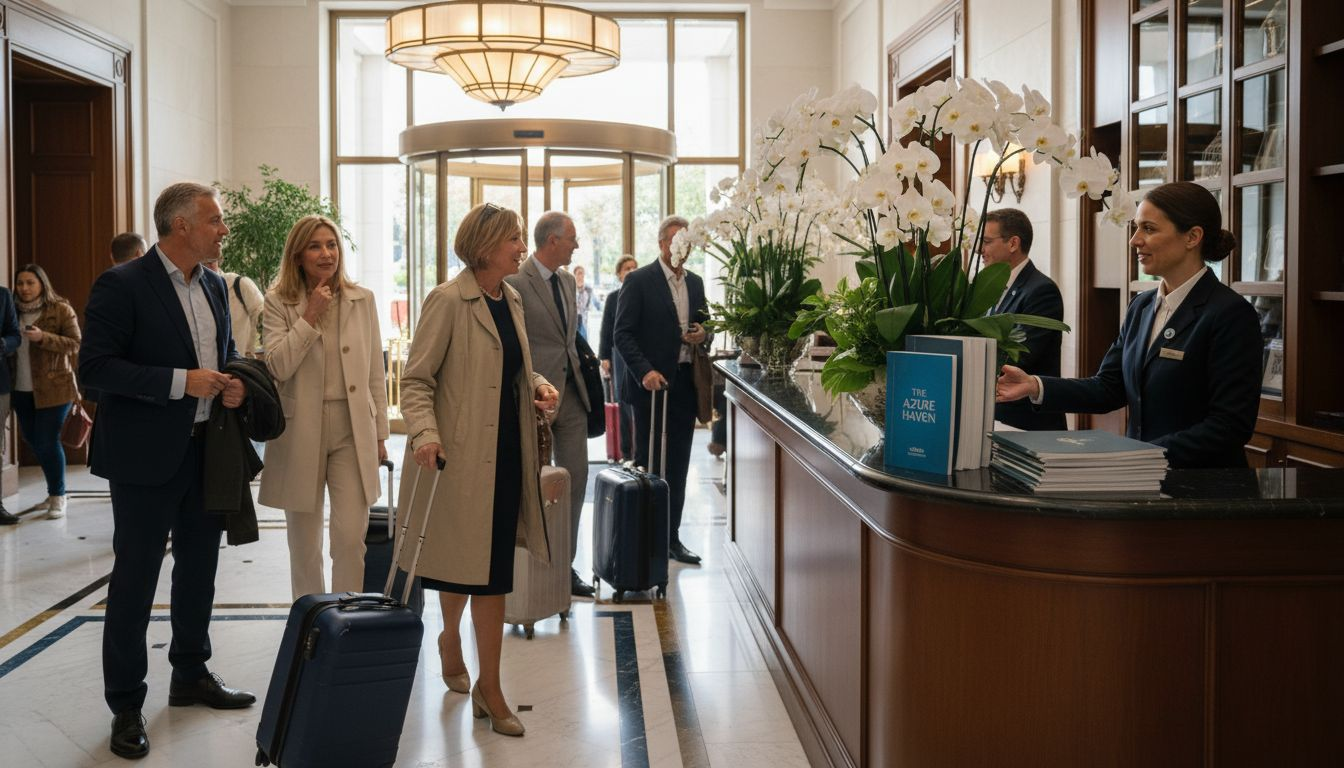
Work with vendors who specialize in luxury group experiences. These partners understand the nuances of coordinating multiple guests and can suggest exclusive activities your group can’t access independently. Verify their insurance coverage, safety protocols, and compliance with local regulations before signing contracts.
Collect early deposits from participants to reduce last-minute cancellation risks. People who commit financially months in advance are far more likely to follow through. Use these funds to secure vendor deposits and lock in pricing.
Pro Tip: Build relationships with value and exclusivity from travel agents who maintain direct connections with luxury properties and can negotiate perks like spa credits, private tours, or exclusive dining experiences.
- Book flights 6-12 months prior for best availability and pricing
- Secure block hotel bookings with negotiable cancellation clauses
- Verify vendor insurance, safety protocols, and compliance
- Collect early deposits to lock in commitments and pricing
- Leverage elite vip group vendor tips for exclusive access
Step 2: communication and coordination structures
Even the best-planned trips fail without clear communication frameworks. Appoint a main coordinator who serves as the single point of contact for vendors and participants. This person owns the master timeline, tracks payments, and makes final decisions when consensus isn’t possible.
Designate deputies for subgroups based on family units, departments, or friend circles. Deputies handle day-to-day questions within their groups and escalate only critical issues to the main coordinator. This hierarchy prevents the coordinator from drowning in minor questions while maintaining oversight.
Establish centralized tracking tools accessible to all stakeholders. Use shared spreadsheets to monitor who’s paid, who’s booked flights, dietary restrictions, room assignments, and activity preferences. Clear communication frameworks prevent bottlenecks and ensure nothing falls through the cracks.
Define payment tracking protocols with transparent deadlines. Send automatic reminders at 60, 30, and 14 days before due dates. Make it easy for participants to see their balance, payment history, and what’s included in each installment.
Set communication norms that respect everyone’s time. Decide whether you’ll use email, messaging apps, or video calls for updates. Establish escalation paths for urgent decisions so small issues don’t derail the entire planning process.
Schedule regular updates at predictable intervals. Monthly check-ins during early planning, biweekly as departure approaches, and weekly in the final month keep everyone aligned without overwhelming inboxes.
Pro Tip: Create a private group chat or social media group where participants can share excitement, coordinate arrivals, and build anticipation. This informal channel complements formal updates and strengthens group cohesion.
- Appoint a main coordinator and subgroup deputies
- Choose centralized digital tracking tools
- Define payment schedules and reminder protocols
- Establish communication channels and escalation paths
- Schedule regular updates at predictable intervals
Don’t underestimate the power of proactive communication. When participants know what to expect and when, they trust the process and enjoy the journey rather than worrying about logistics. For business group incentive travel, this structure becomes even more critical as corporate stakeholders demand accountability and transparency.
Step 3: personalized concierge-level service and experience design
Luxury group travel transcends logistics. It’s about creating moments that resonate personally with each guest while maintaining group cohesion. Start by collecting detailed preferences through your initial questionnaire. Ask about dream experiences, dietary needs, mobility limitations, preferred pace, and non-negotiable must-haves.
Design differentiated activities that let subgroups pursue their interests without fragmenting the trip. Offer a guided wine tour for foodies while adventure seekers enjoy zip-lining, then reunite everyone for a private chef dinner. This approach honors individual preferences while preserving shared experiences.
Arrange exclusive, once-in-a-lifetime experiences through expert advisors who know local partners. Private museum tours after hours, cooking classes with Michelin-starred chefs, or helicopter rides over stunning landscapes create memories that justify the luxury investment. Concierge personalization boosts group satisfaction and encourages participants to book similar trips in the future.
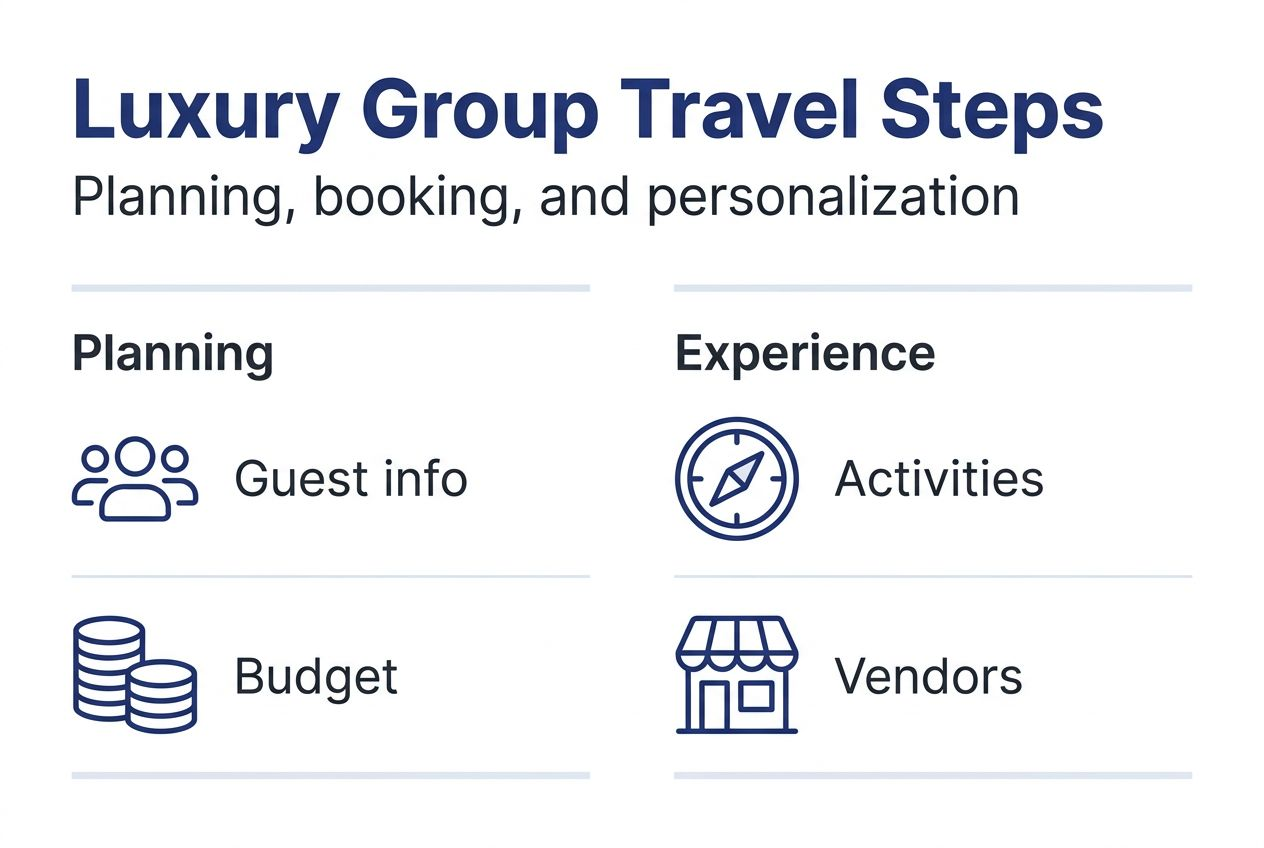
Incorporate flex time into your itinerary. Over-scheduling exhausts guests and eliminates spontaneity. Build in mornings for sleeping in, afternoons for spa treatments, or evenings for unstructured socializing. These breathing spaces let relationships deepen and energy recharge.
Ensure concierge-level service throughout the journey. Assign a dedicated on-ground contact who troubleshoots issues in real time, arranges last-minute requests, and ensures every detail meets luxury standards. This person becomes your eyes and ears at the destination.
Pro Tip: Surprise your group with unexpected upgrades or experiences. A champagne toast at sunset, personalized welcome gifts in rooms, or a local musician at dinner elevate the trip from excellent to unforgettable.
“Luxury isn’t about spending more. It’s about experiencing things that money alone can’t buy: exclusive access, personalized attention, and moments designed around your specific dreams.”
- Collect detailed guest preferences including dietary and mobility needs
- Design differentiated activities for diverse interests
- Arrange exclusive experiences through expert local partners
- Incorporate flex time for rest and spontaneous connection
- Provide concierge-level service with dedicated on-ground support
For customized group travel luxury events, personalization isn’t optional. It’s the difference between a generic group tour and a transformative experience that guests talk about for years.
Common mistakes and troubleshooting
Even experienced organizers stumble over predictable pitfalls. Recognizing these mistakes early lets you course-correct before small problems become trip-ruining disasters.
The most costly error is late booking. Starting 6 months prior dramatically reduces options, inflates prices, and forces compromises on quality. Luxury vendors book out early, especially during peak seasons. By the time you realize you’ve waited too long, the best properties and experiences are gone.
Neglecting individual preferences is the second major mistake. Organizers who focus solely on group activities ignore the diverse needs that make luxury travel personal. Collect and act on details like dietary restrictions, celebration significance, and bucket list experiences. Ignoring these signals leads to disappointed guests who feel overlooked.
Unclear payment processes create confusion and resentment. Without transparent tracking and regular reminders, participants lose track of what they owe and when. This ambiguity damages trust and makes collecting final payments uncomfortable.
Communication breakdowns happen when roles aren’t clearly defined. If everyone thinks someone else is handling vendor confirmations or tracking RSVPs, critical tasks slip through the cracks. Clear protocols and designated owners prevent these failures.
Finally, inadequate vendor vetting puts your entire group at risk. Cutting corners on safety checks, insurance verification, or reference calls can lead to dangerous situations or substandard experiences that ruin the trip.
Pro Tip: Always have backup plans for critical elements. Identify alternative restaurants, backup activities for bad weather, and secondary transportation options before departure.
- Start planning at least 6 months prior to avoid sold-out vendors
- Collect and honor individual preferences to maximize satisfaction
- Maintain transparent payment tracking with clear deadlines
- Define communication roles and escalation protocols
- Vet vendors thoroughly for safety, insurance, and quality
- Late bookings can double price risks and eliminate preferred options
- Generic itineraries disappoint guests expecting personalized luxury
- Payment confusion damages trust and complicates collections
- Undefined roles create coordination failures
- Unvetted vendors pose safety and quality risks
Expected outcomes and success metrics
How do you know if your luxury group trip succeeded? Define realistic benchmarks that measure both participant satisfaction and planning efficiency.
Early planning improves flawless trip execution by 75%. When you start 6 to 12 months ahead, you secure preferred vendors, negotiate better terms, and have time to refine details without rushed decisions. This buffer transforms planning from stressful scrambling into strategic design.
Concierge-level personalization increases guest satisfaction by 60%. Participants who feel their preferences were heard and honored rate trips significantly higher than those who experienced generic group activities. This satisfaction translates into positive reviews, repeat bookings, and enthusiastic referrals.
Advanced bookings reduce price risks substantially. Locking in rates early protects you from seasonal increases, currency fluctuations, and last-minute premiums that can inflate budgets by 30% or more. Financial predictability lets you manage expectations and avoid uncomfortable conversations about unexpected costs.
Expert involvement saves 15 to 20 hours in trip research and coordination. Professional travel advisors bring destination knowledge, vendor relationships, and problem-solving experience that DIY planners spend weeks acquiring. This efficiency frees you to focus on group dynamics and personalization rather than logistics.
Use these benchmarks to evaluate your own planning effectiveness. Track how early you booked key vendors, measure participant satisfaction through post-trip surveys, compare final costs to initial budgets, and calculate time invested versus outcomes achieved.
| Success Metric | Target | Impact |
|---|---|---|
| Planning timeline | 6-12 months | 75% better execution |
| Guest satisfaction | 8.5/10 or higher | 60% personalization boost |
| Budget accuracy | Within 10% of estimate | Reduced financial surprises |
| Time efficiency | 15-20 hours saved | More focus on guest experience |
Expert planning raises flawless trip execution likelihood by 75%, proving that professional guidance delivers measurable value beyond convenience.
For organizers serious about delivering exceptional experiences, these metrics provide objective evidence of planning quality. Share them with stakeholders to justify investment in expert services and demonstrate the return on careful preparation. Review luxury group travel success metrics to benchmark your performance against industry standards.
Plan your luxury group trip with elite travel experts
Organizing luxury group travel demands expertise, connections, and time that most planners simply don’t have. Elite Travel Management Group brings 35 years of experience creating flawless, unforgettable journeys for milestone celebrations, corporate incentives, and special occasions across the U.S. and beyond.
Our concierge-level approach means every detail receives expert attention, from securing exclusive vendor access to personalizing experiences for each guest. We eliminate the stress of coordinating complex logistics while maximizing satisfaction through relationships with the world’s finest luxury properties and local partners.
Choose from curated packages designed specifically for groups. Our adventure travel vacation packages combine thrilling experiences with luxury comfort. For corporate teams, our business group incentive travel programs reward performance with unforgettable destinations and exclusive access. Families celebrating milestones benefit from our expertise in customized group travel luxury events that honor every generation’s preferences.
We charge no service fees, offer a price match guarantee, and provide 24/7 support because luxury travel doesn’t wait for office hours. Contact Elite Travel today to transform your group travel vision into a seamlessly executed, memory-making reality.
Frequently asked questions about organizing luxury group travel
How far in advance should I start planning luxury group travel?
Begin planning at least 6 to 12 months before departure to secure the best luxury vendors, accommodations, and pricing. Early planning prevents sold-out properties and inflated last-minute rates.
What’s the best way to manage payments for large groups?
Use centralized digital tracking tools with transparent deadlines and automatic reminders. Collect early deposits to lock in commitments and send regular updates showing balances and payment history.
How can I ensure all guest preferences are honored?
Distribute detailed questionnaires 8 to 12 months prior that capture dietary needs, mobility requirements, activity interests, and bucket list experiences. Use this data to design differentiated activities and personalized touches.
What safety checks are vital for luxury group vendors?
Verify insurance coverage, safety protocols, compliance with local regulations, and recent references from trusted sources. Never skip due diligence, even for vendors with impressive marketing materials.
Are last-minute bookings ever feasible for luxury group travel?
Last-minute bookings significantly increase costs and risks while reducing options for quality vendors and accommodations. They should only be considered for very small groups with highly flexible preferences.
How do I balance group activities with individual preferences?
Design differentiated experiences that let subgroups pursue unique interests, then reunite everyone for shared meals and signature moments. Incorporate flex time so guests can rest or explore independently without feeling rushed.
