




TL;DR:
- A structured trip itinerary guides travelers through daily plans, including flights, lodging, and activities. Proper sequencing, geographic clustering, and leaving time open reduce stress and enhance the experience. Travelers should book flights early, prioritize high-demand experiences, and limit daily anchor activities for a memorable, balanced trip.
A step by step trip itinerary is a structured, day-by-day travel plan that covers flights, lodging, daily activities, and logistics in a deliberate sequence. Most travel stress traces back to skipped planning steps, not bad luck. When you build your itinerary in the right order, using proven frameworks like the 60% planning rule and geographic clustering, you avoid the two most common trip killers: over-scheduling and wasted transit time. This guide walks you through every phase, from setting your dates to managing on-the-road contingencies, so your trip runs the way you imagined it.
What does a step by step trip itinerary actually include?
A detailed travel itinerary is more than a list of places to visit. The industry term for what most travelers are building is a structured travel plan, and it has four core layers: transportation, accommodation, activities, and logistics. Each layer depends on the one before it. You cannot finalize your hotel until you know your flight times. You cannot book a sold-out cooking class in Florence until you know which days you are actually in the city.
The goal of a structured plan is not to control every hour. The goal is to eliminate the decisions that cause stress so you can enjoy the ones that matter. Knowing your airport transfer is booked and your first night’s hotel is confirmed means you land relaxed, not scrambling.
Elitetravelgroup has spent 35 years building these plans for travelers across Europe and beyond. The consistent finding is simple: the quality of a trip correlates directly with the quality of the planning sequence, not the size of the budget.
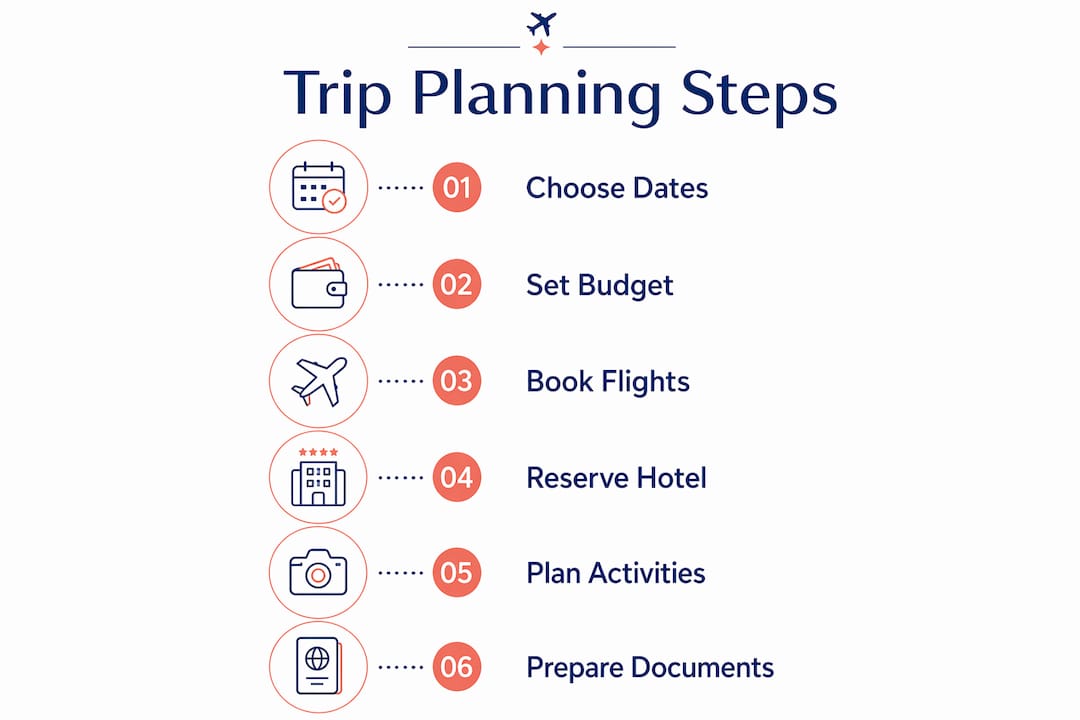
How do you set your trip basics: dates, budget, and constraints?
Every itinerary starts with three fixed parameters. Get these wrong and every decision downstream is built on a shaky foundation.

Choosing your dates and trip length
Travel season matters more than most travelers realize. Shoulder seasons, typically april through may and september through october in Europe, offer lower prices, smaller crowds, and better availability at top restaurants and tours. Your personal schedule sets the outer boundary, but within that boundary, shifting departure by even a few days can change the entire experience.
Building a realistic budget
A balanced travel budget typically allocates 20–30% for flights, 25–35% for accommodation, 15–25% for food, and 10–15% for activities. The detail most travelers skip is the 10% emergency buffer for unexpected costs like medical needs or last-minute transport changes. That buffer is not optional. It is the difference between a minor inconvenience and a ruined trip.
Defining who is traveling and at what pace
A solo traveler moves faster than a family with young children. A couple celebrating an anniversary wants different pacing than a group of college friends. Define your travel style before you plan a single activity. A fast-paced itinerary that works for one traveler causes burnout for another.
- Set your hard dates first, then work backward to identify booking deadlines.
- Assign budget percentages before you start searching for flights or hotels.
- Write down your travel style in one sentence: “We want two major sights per day with long lunches” is a planning instruction.
- Identify any non-negotiable experiences and protect time for them early.
Pro Tip: If you are traveling with others, agree on the daily pace before booking anything. Mismatched expectations about how much to do each day cause more friction than any logistical problem.
What should you book first to anchor your itinerary?
Booking in the right sequence is the single biggest success factor in trip planning. Flight schedules and accommodation availability dictate your actual usable trip time. Everything else fills in around those fixed points.
Book flights first
International flights booked 2–4 months ahead and domestic flights booked 1–3 months early consistently offer the best prices and availability. Tuesday and Wednesday departures tend to be the most cost-effective days. Booking too late narrows your options and forces you into inconvenient routing that eats into your trip time.
Lock in your first night immediately
Booking the first night’s accommodation immediately after flights eliminates a major source of arrival stress. You land knowing exactly where you are going. That single confirmed reservation changes the psychological experience of the entire trip.
Reserve high-demand experiences next
Time-sensitive tours and popular restaurants sell out weeks or months in advance. The Vatican Museums, a Michelin-starred dinner in Kyoto, a hot air balloon over Cappadocia: these are not walk-in experiences. Book them as secondary anchors right after your flights and first hotel are confirmed.
- Prioritize experiences with fixed time slots over flexible ones.
- Check cancellation policies before booking. Free cancellation up to 48 hours is the standard to look for.
- For group travel, review a group travel logistics checklist to catch coordination details that individual travelers often miss.
- Keep a running list of backup options for each anchor activity in case availability changes.
Pro Tip: Screenshot every booking confirmation the moment you receive it. Store them in one folder labeled by destination and date. You will thank yourself at every airport.
How do you build your daily plan without burning out?
Daily itinerary design is where most travelers make their biggest mistakes. The instinct is to fill every hour. The result is exhaustion by day three and a schedule that collapses under the weight of its own ambition.
The 60% planning rule is the most practical framework available: plan only 60% of your trip time and leave 40% open for rest, spontaneity, or unexpected events. That open time is not wasted. It is where the best travel memories happen.
Limit anchor activities per day
Capping daily schedules at 1–2 major anchor activities keeps the trip enjoyable and prevents schedule collapse. An anchor activity is anything with a fixed time, a ticket, or a reservation. A museum visit, a cooking class, a boat tour: these are anchors. A walk through a market or a coffee at a neighborhood café fills the space between them without adding pressure.
Cluster by geography
Clustering activities by neighborhood or district per half-day block cuts transit time and increases daily efficiency. Pick one area for the morning and a neighboring area for the afternoon. Zigzagging across a city wastes 60–90 minutes per day, which compounds across a week into an entire lost day of travel.
Here is what an effective daily block looks like in practice:
| Time | Activity | Notes |
|---|---|---|
| 8:00 AM | Breakfast near hotel | Walk, no transit needed |
| 9:30 AM | Anchor activity (museum, tour) | Pre-booked ticket |
| 12:30 PM | Lunch in same neighborhood | Flexible, no reservation |
| 2:30 PM | Secondary sight or market | Same geographic zone |
| 5:00 PM | Transit to evening area | One transfer maximum |
| 7:30 PM | Dinner reservation | Booked in advance |
Pro Tip: Build transit time and meal time into the schedule as real blocks, not gaps. If you assume lunch takes 30 minutes and it takes 90, your entire afternoon collapses. Budget 90 minutes for every sit-down meal in Europe.
The most common mistake is scheduling activities in three different parts of a city on the same day. You spend more time in transit than at any single destination. Geographic clustering, combined with the role of itinerary design in reducing stress, is the structural fix.
How do you manage logistics, documents, and contingencies?
Logistics are the part of trip planning that travelers delay until the last minute. That delay creates the stress they were trying to avoid.
Using a single shared document, such as Google Docs or Apple Notes, keeps all booking confirmations, addresses, contact numbers, and reservation codes in one accessible place. It also makes sharing the plan with travel companions or a travel advisor straightforward.
Planning airport transfers early prevents last-minute scrambling and aligns smoothly with arrival and departure times. A missed transfer on arrival day sets a negative tone for the entire trip. Book it before you leave home.
- Confirm your phone plan covers data in your destination country. A local SIM or an international data plan costs far less than roaming charges.
- Purchase travel insurance before your first non-refundable booking. Not after.
- If you plan to drive, research local traffic laws and book the rental car at the same time as your accommodation.
- Build a written contingency for your two most likely disruptions: a delayed flight and a canceled tour. Know your options before you need them.
Pro Tip: Print one physical copy of your first day’s logistics: hotel address, transfer confirmation, and a local emergency number. Phones die. Paper does not.
Key Takeaways
A well-sequenced, geographically clustered itinerary with 40% unplanned time produces less stress and more memorable travel than any fully packed schedule.
| Point | Details |
|---|---|
| Book in sequence | Flights first, then first-night hotel, then high-demand activities, in that order. |
| Use the 60% rule | Plan only 60% of your time and leave 40% open for rest and spontaneity. |
| Cluster by geography | Group activities by neighborhood per half-day to cut transit time significantly. |
| Budget with a buffer | Allocate 10% of your total budget as an emergency fund before assigning other categories. |
| Centralize your documents | Keep all confirmations in one shared document accessible from any device. |
Why the best trips I’ve seen share one counterintuitive trait
After years of watching travelers plan and return from trips, the pattern that stands out most is not about destination choice or budget size. The travelers who come back genuinely satisfied are the ones who planned less than they thought they should.
The conventional wisdom says a good trip requires a full schedule. The reality is the opposite. Every over-scheduled traveler I have spoken with describes the same experience: they saw everything on their list and enjoyed almost none of it. They were too tired, too rushed, and too focused on the next item to be present for the current one.
The 60% planning rule sounds like a compromise. It is actually a precision tool. When you cap your anchors at two per day and leave the rest open, you create the conditions for the experiences that cannot be planned: the conversation with a local that leads to a hidden restaurant, the afternoon rainstorm that forces you into a bookshop where you spend two hours and leave with a book you read on the flight home.
Geographic clustering is the other insight that separates good itineraries from great ones. I have seen travelers lose entire afternoons to transit because they booked a morning museum on one side of a city and an evening restaurant on the other. The fix takes five minutes during planning and saves hours on the ground.
If you want bespoke itinerary examples that show what balanced, clustered planning looks like in practice, studying real itineraries from experienced planners is the fastest way to calibrate your own.
The most memorable travel moments are almost never the ones you scheduled. They are the ones you had time for.
How Elitetravelgroup builds your itinerary from the ground up
Planning a detailed trip itinerary takes time, sequencing knowledge, and destination expertise that most travelers build only after making expensive mistakes.

Elitetravelgroup has spent 35 years designing personalized itineraries for travelers who want every detail handled correctly the first time. The team manages complex bookings, applies geographic clustering to daily schedules, and builds flexibility into every plan so your trip holds together even when something changes. Whether you are planning an adventure travel package or a carefully crafted Europe vacation, Elitetravelgroup’s planners handle the sequencing, the logistics, and the contingencies. There are no service fees and a price match guarantee. Contact Elitetravelgroup to start building your itinerary today.
FAQ
What is a step by step trip itinerary?
A step by step trip itinerary is a structured travel plan organized by day, covering flights, accommodation, activities, and logistics in a deliberate sequence. It differs from a simple packing list by addressing the full arc of a trip from departure to return.
How far in advance should I book flights for my itinerary?
Book international flights 2–4 months ahead and domestic flights 1–3 months early for the best prices and availability. Tuesday and Wednesday departures are consistently the most cost-effective options.
How many activities should I plan per day?
Limit your schedule to 1–2 anchor activities per day. Filling every hour causes burnout and schedule collapse; leaving open time produces more enjoyable and memorable travel.
What percentage of my budget should go to flights and hotels?
Flights typically take 20–30% of a travel budget and accommodation takes 25–35%. Always reserve a 10% emergency buffer before allocating funds to food and activities.
How do I keep my itinerary organized while traveling?
Store all booking confirmations and travel documents in a single shared document like Google Docs or Apple Notes. Print a physical copy of your first day’s logistics as a backup.
