



TL;DR:
- Experiential travel focuses on immersive, personalized experiences that create lasting emotional connections.
- The global market for experiential travel is rapidly growing, driven by affluent travelers seeking authenticity.
- Responsible curation and genuine local engagement are essential to avoid inauthentic or superficial experiences.
Nearly every affluent traveler today is chasing something that a five-star hotel room and a city tour simply cannot deliver. 98% of travelers now say unique experiences directly influence where and how they travel, and the global experiential travel market is expanding at a pace that reflects this profound shift. The era of checking landmarks off a list is fading fast. What’s replacing it is richer, more personal, and far more lasting: travel that changes how you see the world and yourself.
Table of Contents
- Defining experiential travel: Beyond sightseeing
- Experiential vs. traditional luxury travel: What’s different?
- Trends, growth, and the rise of immersive demand
- Navigating the pitfalls: Inauthenticity and real challenges
- How to plan an authentic experiential journey
- Why true experiential travel is harder (and more rewarding) than it looks
- Elevate your next journey with expert-curated experiences
- Frequently asked questions
Key Takeaways
| Point | Details |
|---|---|
| True immersion matters | Experiential travel prioritizes deep engagement for authentic memories, moving beyond conventional tourism. |
| Luxury is evolving | Affluent travelers now seek personal transformation, not just premium amenities or destinations. |
| Curation is key | Expert guidance and local partnerships ensure authentic, meaningful, and responsible journeys. |
| Watch for pitfalls | Avoid superficiality, overcrowding, and ethical missteps by prioritizing sustainability and genuine intent. |
Defining experiential travel: Beyond sightseeing
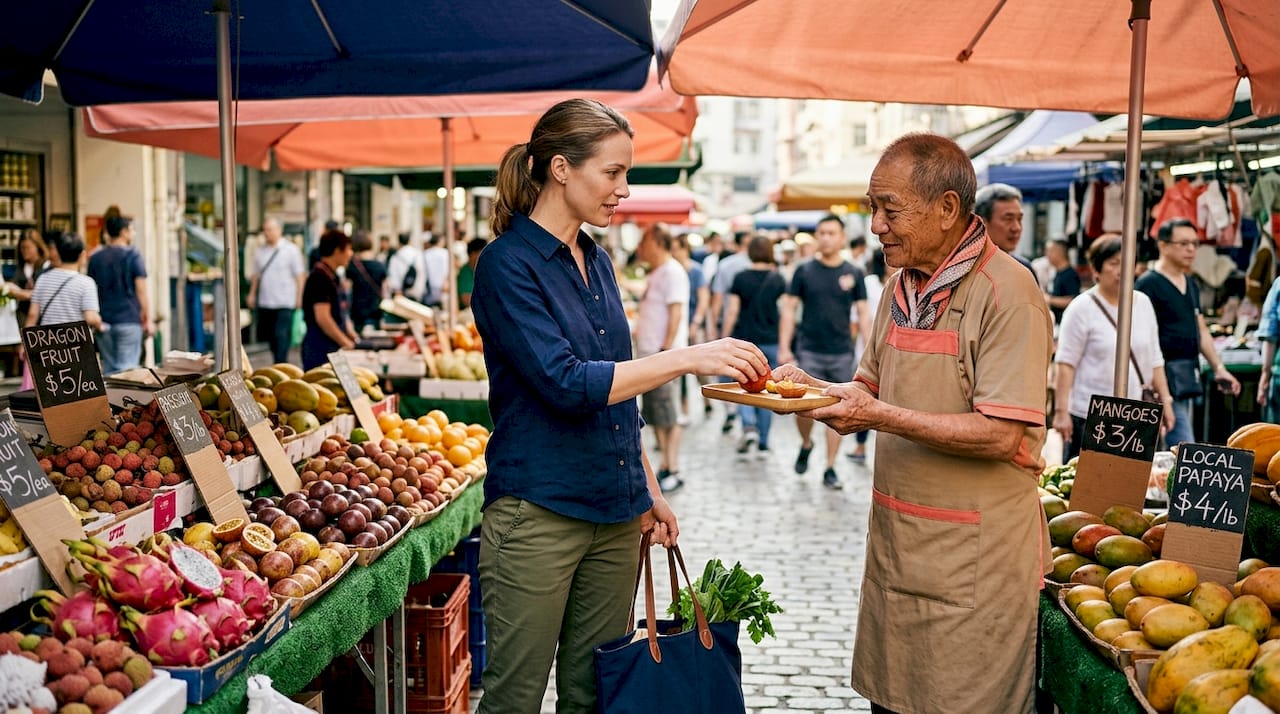
Experiential travel is not simply a buzzword. It is a fundamentally different philosophy of how to move through the world. Where traditional tourism places you in front of something beautiful, experiential travel puts you inside it. You are not observing a Moroccan souk from behind glass; you are negotiating for spices alongside a local chef who is teaching you to recreate a recipe passed down for generations. You are not admiring Tuscan vineyards from a tour bus; you are harvesting grapes at dawn with the family who owns the land.
At its core, experiential travel transforms luxury tourism by prioritizing deeper emotional engagement and irreplaceable memory-making over mere comfort or status. It is built on three pillars: immersion, personalization, and emotional resonance. Each trip becomes a story that belongs only to you, shaped by your interests, curiosities, and values.
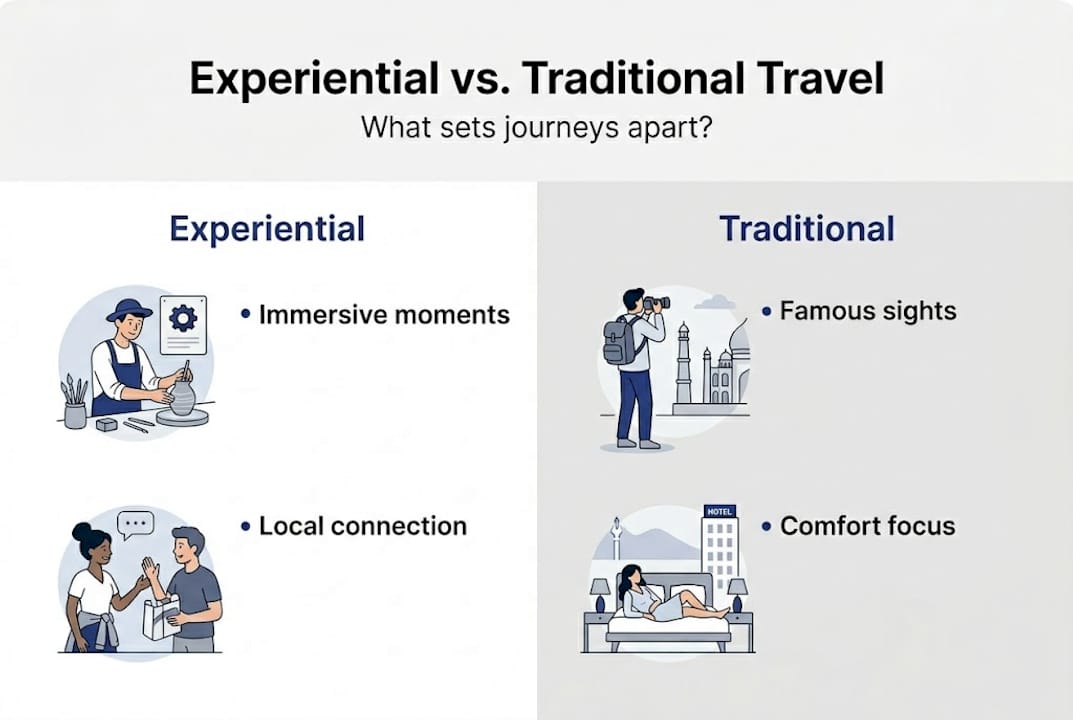
The clearest contrast with traditional tourism is the difference between passive observation and active engagement. A standard luxury tour gives you the best seat in the house. An experiential journey makes you a participant in the narrative. The cultural fabric of a destination is not admired from a distance; it is touched, tasted, and understood.
For today’s authentic luxury journeys, affluent travelers increasingly expect more than impeccable service. They want to return home with knowledge, connection, and perspective they genuinely could not have gained anywhere else. The irreplaceable moment has become the new ultimate luxury.
Key elements that define genuine experiential travel include:
- Cultural participation: Learning traditional crafts, cooking techniques, or ceremonies directly from community members
- Expert curation: Access to guides, historians, and local specialists who reveal layers of a place most visitors never see
- Authenticity: Encounters and activities rooted in real local life, not manufactured for tourist consumption
- Personalization: Itineraries built around your specific passions, pace, and purpose
- Emotional depth: Experiences designed to leave a lasting impression rather than just fill a schedule
“The most valuable luxury currency in 2026 is not thread count or Michelin stars. It is the feeling you cannot replicate or purchase twice.”
Experiential vs. traditional luxury travel: What’s different?
Understanding the concept intellectually is one thing. Seeing how it plays out across every dimension of a journey is another. The table below lays out the clearest distinctions between these two approaches.
| Dimension | Experiential travel | Traditional luxury travel |
|---|---|---|
| Purpose | Transformation and connection | Comfort and exclusivity |
| Approach | Active, immersive participation | Passive observation and consumption |
| Value | Depth of memory and meaning | Quality of amenities and service |
| Planning | Personalized around passions | Standardized around premium offerings |
| Outcome | Changed perspective and lasting stories | Relaxation and status experiences |
| Measure of success | Emotional impact | Material quality |
The shift happening across the affluent travel market is not subtle. 86% of Millennials now prioritize cultural engagement and personalized experiences over material comfort when planning travel. This generation now wields significant wealth, and their preferences are reshaping what the entire luxury travel industry builds and offers.
This does not mean that personalized immersive journeys require sacrificing comfort. Quite the opposite. The ideal experiential journey weaves extraordinary activities into an equally extraordinary setting. You can absolutely sleep in a stunning property with butler service while spending your days cooking with street vendors or tracking wildlife with a conservation biologist. The two philosophies are not mutually exclusive. They are complementary when curated well.
What affluent travelers are moving away from is the idea that a beautiful room and a famous restaurant are sufficient on their own. They want the top luxury hotel experiences to serve as a refined base camp for something genuinely memorable, not the highlight of the trip itself.
Here is what the shift in priorities looks like in practice:
- Requesting private access to archaeological sites rather than joining group tours
- Commissioning local artists to create custom pieces during studio visits
- Arranging family home dinners with local hosts instead of relying solely on restaurant reservations
- Planning trips around seasonal events, harvests, or festivals that only happen once a year
Trends, growth, and the rise of immersive demand
The numbers behind experiential travel are staggering, and they confirm what intuition already suggests. The global experiential travel market was valued between $1.1 and $2.9 trillion in 2024 and 2025, with projections pointing toward $5 trillion or more by 2034, growing at compound annual rates between 7% and 12%. The affluent and high-net-worth segments are the fastest-growing categories within that figure.
| Segment | 2024 Estimated Value | 2034 Projection | Key Driver |
|---|---|---|---|
| Overall market | $1.1T to $2.9T | $5T+ | Shifting traveler values |
| Affluent/HNWI segment | Fastest growing | Dominant share | HNWI population growth |
| Sustainable luxury | Rapidly expanding | Mainstream | Ethical responsibility |
What is fueling this? Two overlapping forces. The first is demographic. High-net-worth individuals (HNWIs) are increasing globally, and their travel priorities consistently skew toward meaning and exclusivity of experience rather than material display. The second is cultural. There is a growing recognition, even among the ultra-wealthy, that affluent segments growing fastest due to the rise of HNWIs is also tied to a genuine values shift toward sustainability and purpose-driven living.
“Authenticity has become the new status symbol. Where you went matters less than what you did while you were there.”
Real-world impact shows up in how luxury operators are redesigning their offerings. Private safaris now include time with wildlife researchers. Yacht charters incorporate marine conservation projects. Cultural tours in Japan provide access to artisans and ceremonies that no amount of money could secure through a standard booking channel.

Pro Tip: The most exclusive experiential itineraries are rarely listed anywhere publicly. Partnering with a trusted luxury travel expert who has cultivated long-term relationships with local specialists is the single most reliable way to unlock them. The connection matters more than the budget.
Booking with a luxury travel expert ensures that what you gain access to genuinely reflects insider knowledge rather than a polished version of what every other traveler already receives. This is especially true for VIP travel experiences in destinations where cultural nuance requires a trusted local intermediary.
Navigating the pitfalls: Inauthenticity and real challenges
Experiential travel, for all its promise, is not immune to disappointment. In fact, because the expectations are higher and more emotionally charged, the gap between a well-executed journey and a poorly curated one feels wider.
Critics have pointed out that inauthenticity, environmental strain, high costs, exploitation of local communities, and the pressure to achieve “perfect” immersion can all undermine the value of an experiential journey. These are not theoretical concerns. They show up frequently in practice.
Common pitfalls include:
- Inauthenticity: Activities that are staged for tourists rather than rooted in real local life, such as “traditional” villages built specifically for travel groups
- Environmental strain: Overcrowding hidden gems after they go viral, damaging ecosystems and eroding the very quality that made them special
- Social pressure: Treating a destination like a checklist to share online rather than a place to genuinely inhabit
- Cultural insensitivity: Entering sacred or personal spaces without proper context or genuine respect
- Exploitation: Paying to participate in experiences that extract value from a community without fairly compensating or empowering its members
Research into safari travel highlights how easily superficial interactions, cultural insensitivity, and social-media-driven trend-chasing can creep into even premium itineraries. The physical setting can be extraordinary while the experience itself remains emotionally hollow.
The environmental and ethical dimensions deserve particular attention. Responsible curation is not optional for travelers who care about the long-term health of the places they love most. Choosing operators who reinvest in local communities, limit group sizes, and minimize environmental impact is not just morally sound. It is what preserves these experiences for future visits.
Pro Tip: Before booking any “immersive” activity, ask three questions. Who benefits from this financially? Is this how locals actually live or is it staged? What does the operator give back to the community? The answers will reveal whether the experience is genuine or performative. Embracing responsible travel practices is the clearest sign of a traveler who understands the full picture.
“The goal is not to collect experiences. The goal is to be genuinely changed by them.”
How to plan an authentic experiential journey
With awareness of both the potential and the pitfalls, here is a clear framework for building a journey that delivers on everything experiential travel promises.
Start with your passions, not the destination. What genuinely moves, fascinates, or challenges you? Food, architecture, conservation, music, history, craft? Anchor the trip in something that matters to you personally rather than working backward from a place that looked good in a photo.
Engage expert curators early. Curation by experts and validation with local partners is the single most reliable way to build an itinerary that is both irreplaceable and authentic. Do not wait until the flight is booked to ask for help.
Research the ethics behind each activity. Wildlife encounters, village visits, and cultural ceremonies all require context. Verify that participation is welcomed by the community and structured in a way that respects rather than extracts.
Embrace white space in the itinerary. Some of the most transformative experiential moments are unscheduled. Leave room for organic conversations, detours, and the unexpected. An itinerary packed hour by hour leaves no space for genuine discovery.
Use technology as a tool, not a replacement for human insight. AI can surface personalization options and surface hidden gems, but local knowledge and relationships remain irreplaceable. Technology should amplify human curation, not substitute for it.
Prioritize quality of engagement over quantity. Two deeply meaningful experiences in a day create more lasting value than seven rushed ones. Think depth, not breadth.
Debrief after the journey. The reflection that follows a well-crafted experience is where transformation actually happens. Write, photograph, or simply sit with what you encountered. This is where meaning is built.
Customizing luxury journeys at this level of intentionality requires genuine partnership between traveler and advisor. And for those exploring these ideas with a group, curated group travel can amplify the impact significantly when shared discovery is part of the design.
Pro Tip: Invest in trusted curation the same way you invest in other meaningful things: with patience, research, and a clear sense of what success looks like for you. Quality over quantity is not a compromise here. It is the strategy.
Why true experiential travel is harder (and more rewarding) than it looks
Here is the uncomfortable truth the experiential travel industry rarely shares openly: not every immersive trip is actually transformative. The word “immersive” has been attached to so many packages and itineraries that it has started to lose its meaning. Staying in a luxury tented camp does not automatically create depth. Attending a cooking class does not automatically produce cultural understanding.
Real transformation in travel requires intention from the traveler, not just a well-designed program from the operator. This is a crucial distinction. When people chase authentic experiences for social validation or simply because immersive travel is trending, they often return home mildly entertained but not genuinely changed. The Instagram content is there. The shift in perspective is not.
The most rewarding journeys we have seen our clients take share a common thread: the traveler arrived curious and open, not simply expecting to be impressed. They engaged with local people as people, not as props in their personal narrative. They allowed the unexpected to reroute the day and found those detours were frequently the point.
Working with expert travel planners matters enormously here, not because advisors can guarantee transformation but because they can eliminate the friction that prevents it. When logistics are invisible, you are free to be fully present. When access is curated thoughtfully, the layers of a place reveal themselves naturally. True luxury, in this sense, is the freedom to focus entirely on the experience itself.
There is also a discipline involved in not overpacking an itinerary. Rushed schedules and back-to-back activities are the enemies of genuine immersion. The most meaningful journeys often look quieter on paper than the most impressive ones. And that is exactly the point.
Elevate your next journey with expert-curated experiences
The insights in this guide reflect something we have built our entire practice around at Elite Travel Management Group: the idea that truly exceptional travel requires more than a big budget and beautiful properties. It requires strategy, trusted relationships, and a deep commitment to matching each traveler to the experiences that will matter most to them.

When you are ready to move beyond remarkable destinations and into genuinely life-changing journeys, we are here to make that happen. Explore adventure travel packages designed to push beyond the expected, or take the first step toward designing your ideal journey with a consultation built around your unique passions and goals. At Elite Travel Group, we charge no service fees, offer a price match guarantee, and are available 24/7 to ensure every detail reflects exactly who you are and what you value most.
Frequently asked questions
What makes experiential travel different from regular tourism?
Experiential travel emphasizes deep local engagement and emotional connection rather than passive sightseeing, making each journey personally meaningful rather than just visually impressive.
Are immersive travel experiences only available to luxury travelers?
While affluent travelers are leading growth in this space, the experiential travel market is expanding rapidly with curated options emerging at multiple service levels across the industry.
How can travelers avoid inauthentic or superficial experiences?
Prioritize expert curation and local partnerships before booking: experts and local partners are the most reliable safeguard against staged or hollow activities.
What are the risks of experiential travel?
Risks include high costs, environmental strain, and the pressure for perfect immersion, all of which responsible planning and thoughtful curation can meaningfully reduce.
Is technology helping or hurting the authenticity of experiences?
AI is a useful personalization tool, but genuine authenticity depends on local insight and validation that technology alone cannot replicate.
