



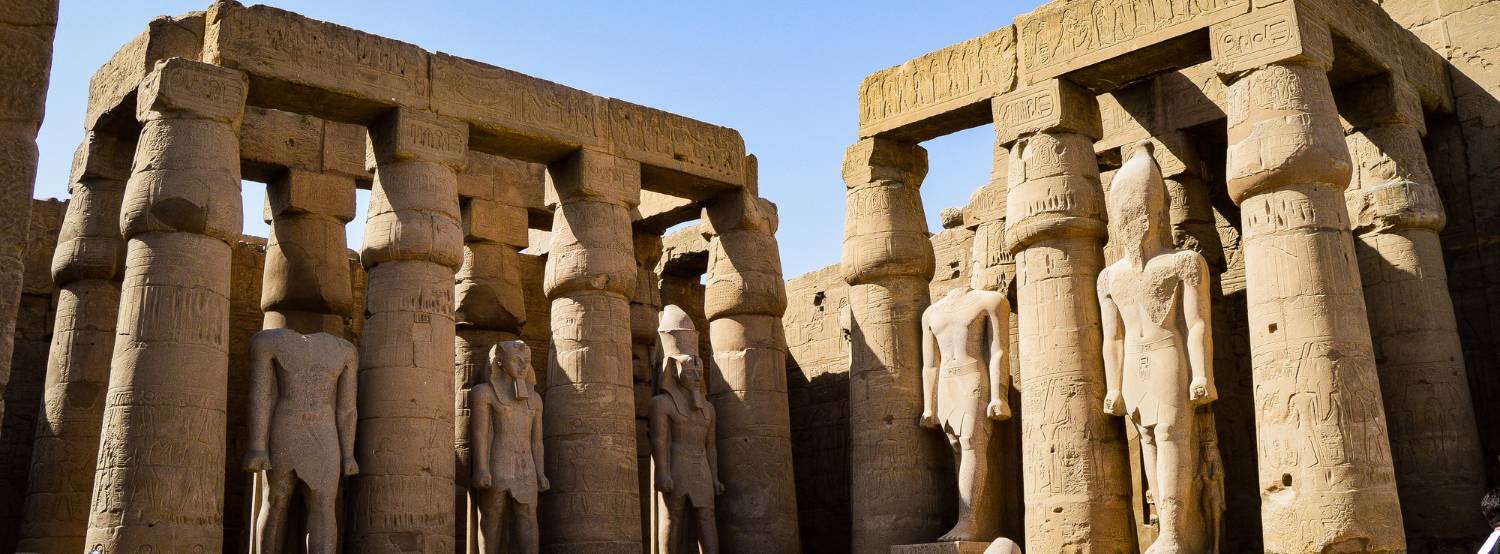
Luxor: The World’s Greatest Open-Air Museum
Luxor, situated on the east bank of the Nile River in southern Egypt, is often called the “world’s greatest open-air museum” due to its unparalleled collection of ancient monuments. Once the ancient city of Thebes, Luxor is home to some of the most important archaeological treasures of Ancient Egypt, including the Valley of the Kings, the Karnak Temple, and the Luxor Temple. This historically rich city is a must-visit for history enthusiasts, luxury travelers, and families, offering a perfect blend of cultural immersion and relaxation by the Nile.
Call Elite Travel at (727) 726-9090 to book your trip today.
Fun Facts:
- Luxor is built on the site of the ancient city of Thebes, which was the capital of Egypt during the Middle and New Kingdoms.
- The Karnak Temple complex, dedicated to the god Amun-Ra, is the largest religious building ever constructed.
- The Valley of the Kings, located on the west bank of the Nile, is where the tombs of pharaohs, including Tutankhamun, were discovered.
- The Luxor Temple was built around 1400 BCE and is connected to the Karnak Temple by the Avenue of Sphinxes, a 3 km-long pathway lined with sphinx statues.
- Howard Carter discovered the tomb of King Tutankhamun in 1922, and it is one of the most famous archaeological finds of the 20th century.
- The Mortuary Temple of Hatshepsut, a striking structure built into the cliffs, is one of Egypt’s most visually stunning temples.
- Hot air balloon rides over the West Bank of Luxor offer a breathtaking view of ancient monuments and the fertile Nile Valley.
- The Colossi of Memnon, two massive stone statues of Pharaoh Amenhotep III, have stood guard over the Theban necropolis for over 3,000 years.
- Luxor’s population swells with archaeologists and tourists every year, drawn to its vast historical sites.
- The city has a warm desert climate and is one of Egypt’s hottest cities, with summer temperatures often reaching above 40°C (104°F).
- Luxor’s proximity to the Red Sea coast allows easy access to ancient wonders and relaxing beach resorts.
- The city is home to several ancient Egyptian festivals that are still celebrated today, such as the Opet Festival, which honored the gods Amun, Mut, and Khonsu.
- The Valley of the Queens, also located on the west bank, is where the tombs of queens and royal children were buried.
Questions and Answers:
- When is the best time of year to visit Luxor?
– The best time to visit Luxor is during the cooler months, from October to April when the temperatures are more comfortable for exploring the outdoor sites. Summers can be sweltering, making sightseeing difficult in the peak afternoon heat. - What are the must-see sights in Luxor?
– Must-see sights include the Valley of the Kings, Karnak Temple, Luxor Temple, Hatshepsut’s Mortuary Temple, and the Colossi of Memnon. Don’t miss taking a hot air balloon ride over the West Bank for a bird’s-eye view of the region’s ancient sites. - Is Luxor family-friendly?
– Yes! Families will enjoy exploring the temples and tombs, taking boat trips on the Nile, and even going on a hot air balloon ride. Luxor’s cultural significance and engaging stories of pharaohs and treasures make it an exciting place for children. - What adventure activities are available in Luxor?
– Besides exploring ancient tombs and temples, adventure seekers can take a hot air balloon ride over the Nile, enjoy a felucca boat ride at sunset, or explore the desert landscapes on camelback or horseback. Hiking in the hills surrounding the Valley of the Kings is also popular. - Tell me about Luxor’s history and culture.
– Luxor was once the ancient city of Thebes, the capital of Egypt during the Middle and New Kingdoms, and a major religious center. The most potent pharaohs built the city’s temples and tombs to honor the gods and ensure their legacy in the afterlife. Today, Luxor is a bustling city celebrating its ancient roots while embracing modern tourism and Egyptian culture. - Is Luxor a popular destination for destination weddings?
– While it’s not a typical wedding destination, Luxor’s stunning ancient temples and luxurious Nile-side resorts make it a breathtaking backdrop for intimate weddings or vow renewal ceremonies, especially at sunset near the river or at a historical site like Karnak Temple. - What group-friendly activities are available in Luxor?
– Groups can enjoy guided tours of the Valley of the Kings and the Karnak and Luxor temples, take a Nile cruise between Luxor and Aswan, and explore the city’s markets. Private hot-air balloon rides and camel treks are also perfect for group experiences. - What is the local cuisine like in Luxor?
– Luxor’s cuisine combines traditional Egyptian dishes, including ful medames (fava beans), koshari (a mix of pasta, rice, and lentils), and grilled meats like kebabs. Nile fish and fresh vegetables are also common in local dishes. Enjoy a meal in a traditional Egyptian restaurant or on a Nile cruise boat. - Are there any significant festivals in Luxor?
– The Opet Festival, an ancient festival celebrated in Luxor, honored the god Amun and involved processions from Karnak Temple to Luxor Temple. While this ancient festival is no longer celebrated, Luxor hosts the modern Luxor African Film Festival in March, which celebrates African cinema. - Can you find luxury accommodations in Luxor?
– Yes, Luxor offers a variety of luxury hotels and resorts, many of which are located along the Nile with stunning river views. Top hotels include the Sofitel Winter Palace Luxor, which has a long history of hosting dignitaries, and several upscale Nile cruise boats that offer luxurious experiences while sailing between Luxor and Aswan.